Type in a search word
What are you looking for

Public buildings made of wood instead of concrete? The industry is ready for this, but several obstacles are holding back change
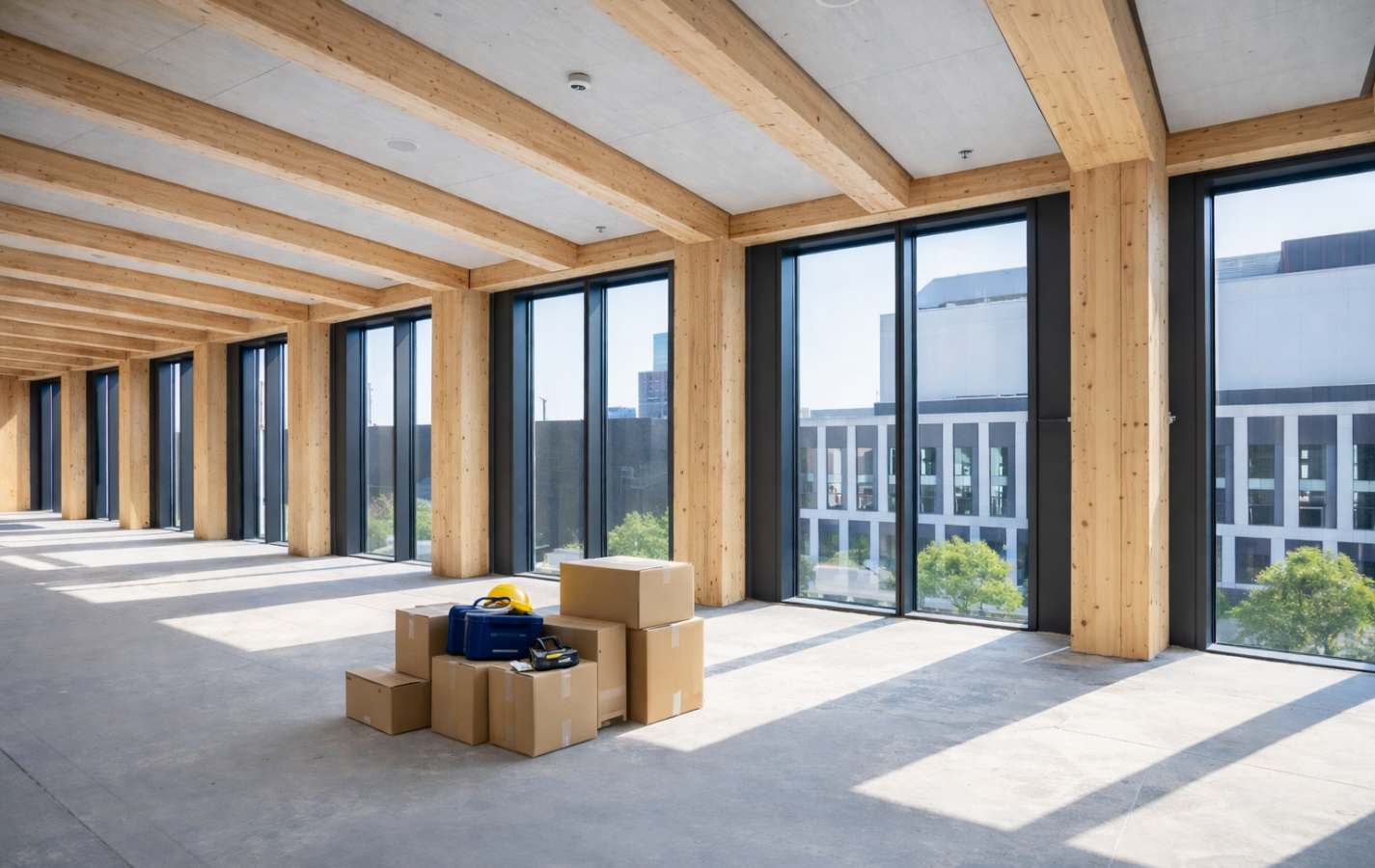
According to a government resolution, from 2024, new public buildings will be required to use at least 50% wood and other organic materials, and from 2023, the Fire and Rescue Department (Lithuanian PAGD) will allow the construction of wooden public buildings up to 9 stories high. However, unlike in Scandinavian countries, such buildings are still a rarity in Lithuania. Experts recognize that wood is a safe, aesthetic alternative that meets climate strategy goals, but there are still obstacles that hinder the development of modern wooden public buildings in Lithuania.
The industry is ready, but requirements drive up prices
Data from the United Nations environment programme’s “Global status report for buildings & construction” shows that the construction and building sector accounts for about 34% of all energy-related carbon dioxide emissions, which is why wooden structures – as a means of carbon sequestration – are becoming a relevant alternative for both climate policy and the construction industry.
As noted by our colleague, “VMG Lignum Systems” Project Manager Vidas Turauskis, the Lithuanian wood industry has long had the engineering and technological capabilities to implement complex wooden construction projects that meet climate change and aesthetic requirements.
According to Vidas Turauskis, economic barriers are still hindering the development of projects. Wooden structures require additional fire safety measures, protection from atmospheric effects during construction, and a higher level of construction workmanship, which is why the total costs are higher than for buildings made of traditional materials.
The VMG Lignum Systems expert emphasizes that assembling building elements that are as complete as possible at the factory using the Lego principle reduces construction time and ensures quality.
Architects’ possibilities are limited by regulations
The architectural community agrees that wood offers exceptional aesthetics and sustainability potential, but its use must be balanced with functionality.
“Wood is best revealed when combined with other materials, such as concrete or steel. This achieves both structural strength and sustainability,” says Algimantas Pliučas, Chairman of the Lithuanian Chamber of Architects.
However, current regulations make it difficult for architects to create wooden exteriors. The mandatory covering of surfaces with non-combustible fire retardants or plasterboard panels detracts from the natural feel of wood, makes the technology more expensive, and renders projects unaffordable.
Safety is still difficult to ensure
Vincas Sasnauskas, Head of the Fire Prevention Division of the State Fire Supervision Board of the Civil Protection and Disaster Management Department, emphasizes that the differences between Lithuania and Scandinavia are mostly due to differences in risk assessment rather than technology.
According to him, in Scandinavian countries such as Sweden and Norway, fire safety regulations provide for the possibility of applying a results-based assessment. This means that during the design phase, alternative technical solutions may be used if calculations prove that the same or a higher level of safety is ensured. This approach allows for the construction of taller wooden buildings.
“In 2024, around 500 violations were identified in inspected buildings in our country, which were related to technically faulty or non-functioning active fire safety engineering systems. Therefore, we should strive not only to install the necessary active fire safety engineering systems, but also to ensure that they are properly operated and maintained,” says the PAGD representative.